
Say “PCOS” and most people picture the same presentation: irregular periods, weight gain, persistent acne. So when a woman’s cycle arrives on schedule, and her weight hasn’t changed, it’s reasonable to assume PCOS isn’t the cause.
That assumption isn’t always correct. Many women have consistently regular periods, a healthy body weight, and PCOS at the same time. Often, the condition isn’t identified until they begin trying to conceive, or a routine blood test reveals an unexpected hormonal finding.
At Healing Touch Nursing Home, we encounter this more often than you’d think. Here’s what’s actually going on.
What PCOS Actually Is
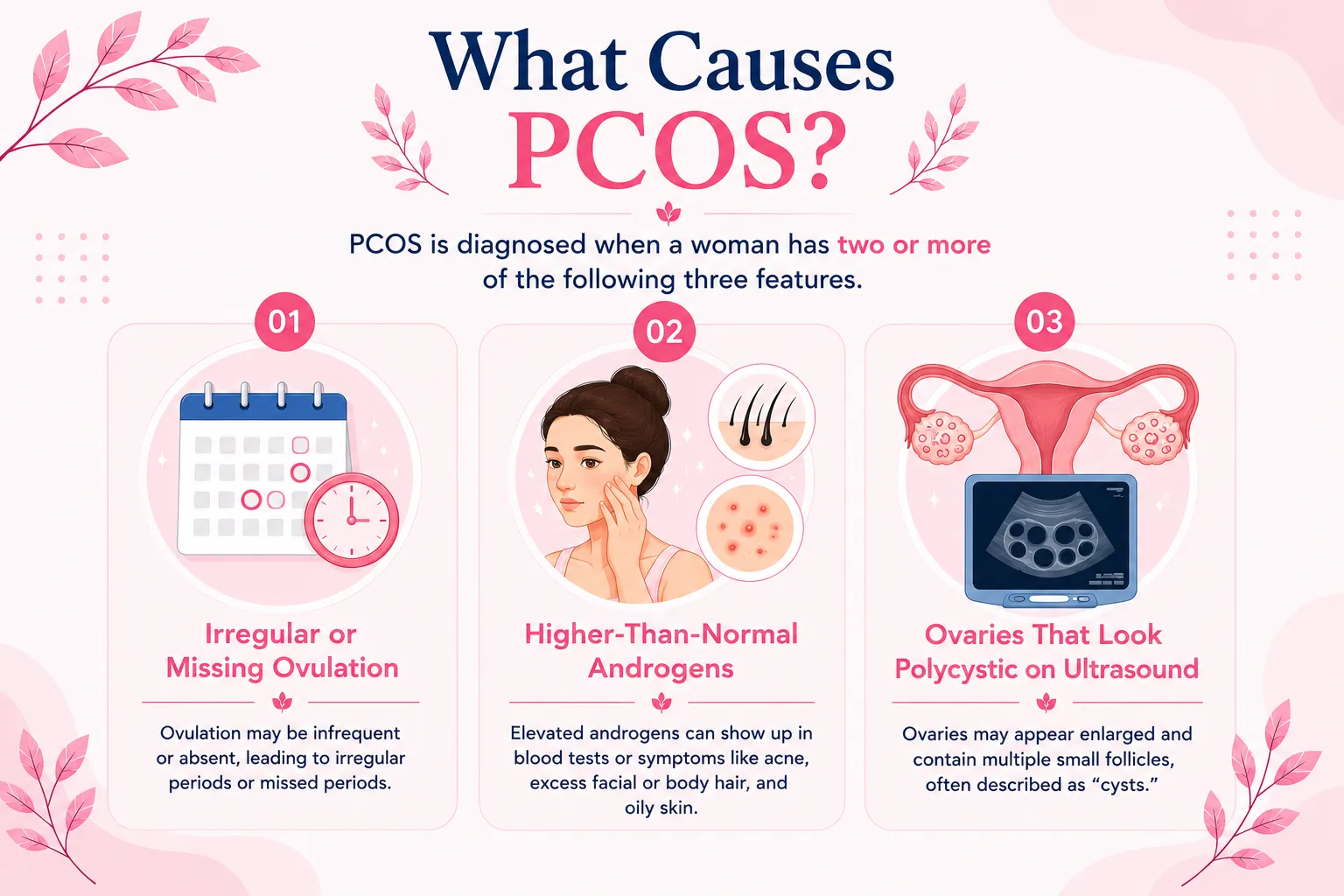
PCOS is a hormonal condition: the ovaries end up producing more androgens (think testosterone) than they should. That can throw off ovulation, mess with metabolism, and change how the ovaries look on an ultrasound.
Doctors typically go by the Rotterdam criteria, and you only need two out of these three to get a diagnosis:
- Irregular or missing ovulation
- Higher-than-normal androgens, whether that’s on a blood test or through symptoms like acne and extra hair growth
- Ovaries that look polycystic on ultrasound
Notice weight isn’t on that list. Neither is cycle regularity. That’s the part people tend to overlook.
Can You Have PCOS With Regular Periods, Though?
Yes, genuinely. You can be ovulating on a fairly normal schedule and still check two of those three boxes through androgens and ovarian appearance alone. This shows up in the literature as “lean PCOS” or ovulatory PCOS, and it’s easy to miss precisely because the symptom everyone’s watching for- an unpredictable cycle- isn’t there.
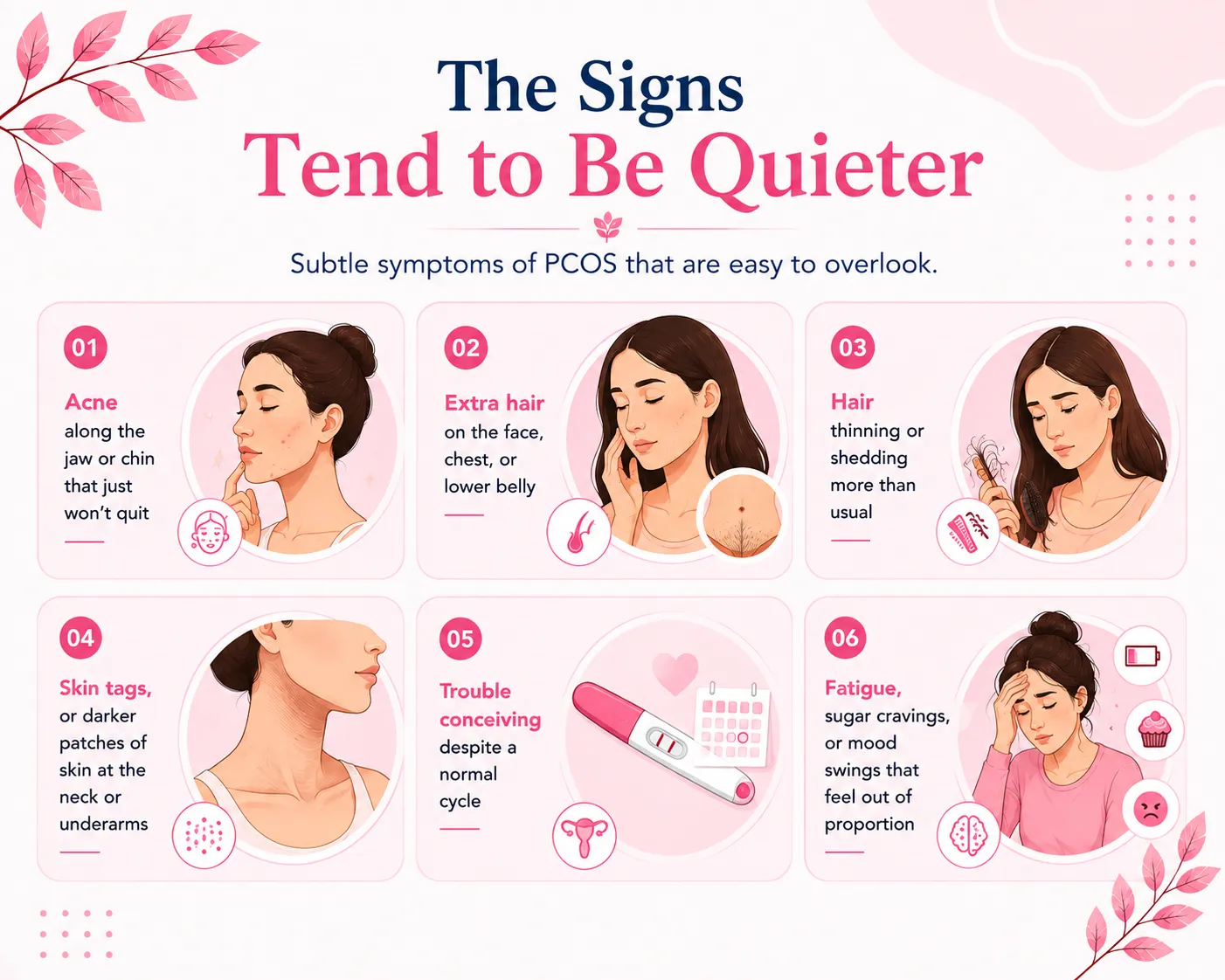
The signs tend to be quieter:
- Acne along the jaw or chin that just won’t quit
- Extra hair on the face, chest, or lower belly
- Hair thinning or shedding more than usual
- Skin tags, or darker patches of skin at the neck or underarms
- Trouble conceiving despite a normal cycle
- Fatigue, sugar cravings, or mood swings that feel out of proportion
None of these scream “hormonal condition” on their own, so they usually get blamed on stress, genetics, or “that’s just my skin.” It often takes a doctor’s visit for something else entirely, usually fertility, before PCOS even comes up.
"But I Haven't Gained Weight" Why That Doesn't Rule It Out
PCOS and insulin resistance often go hand in hand, and insulin resistance often shows up as weight gain. Often, not always. You can be insulin-resistant, or have elevated androgens, and still sit at a completely normal weight. Genetics, muscle mass, how active you are, even where your body tends to store fat- all of that affects whether PCOS ever touches the scale.
That’s part of why doctors are backing away from using weight as a filter for who gets tested. A lean woman with PCOS is dealing with the same hormonal imbalance as anyone else with the condition; if anything, hers is harder to catch, because nothing about her weight prompts a doctor to dig further.
Why Bother Getting Diagnosed At All?
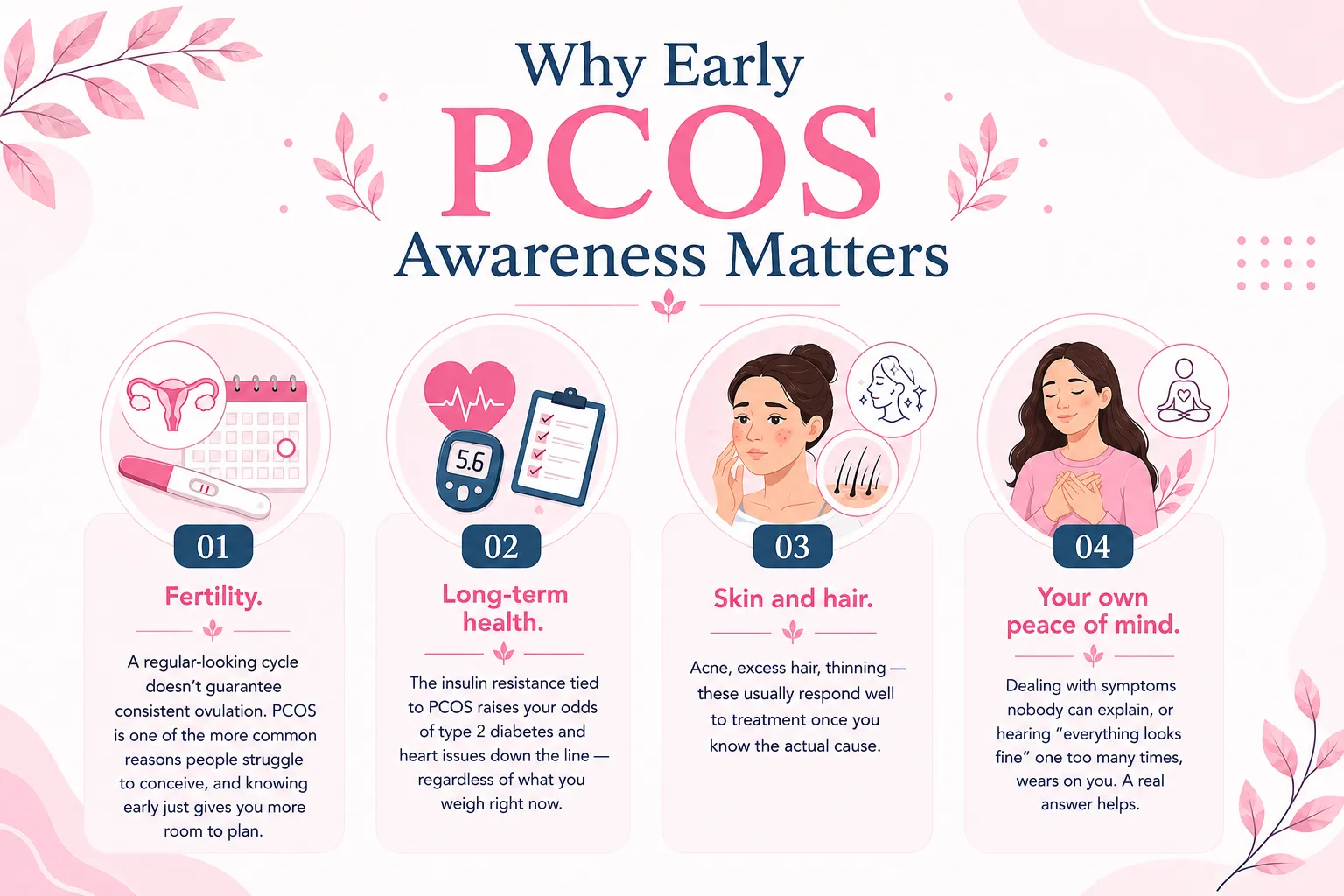
Fair question: if your periods are fine and your weight is fine, what’s the point? But PCOS isn’t really about periods and weight. It reaches further than that:
So How Do Doctors Catch It When the Signs Are This Subtle?
If your cycle’s normal but something else feels off, a gynaecologist won’t lean on one symptom alone. Expect something more like:
- A real conversation about your symptoms, your cycle, your family history
- Blood work checking androgens, insulin resistance, thyroid function
- A pelvic ultrasound to look at the ovaries directly
- Ruling out other things that can mimic PCOS, like thyroid disorders
One caveat worth knowing: ovaries that look polycystic on a scan don’t automatically mean PCOS; plenty of women without the condition have ovaries that look similar. It’s really the combination of symptoms, bloodwork, and imaging together that tells the full story.
Treating PCOS When You Don't Fit the "Usual" Picture
With lean or ovulatory PCOS, weight loss- usually step one for other PCOS cases- isn’t really the lever here. Instead, treatment tends to focus on:
Hormones. Depending on your symptoms and whether you’re trying to conceive, your doctor might suggest treatment to bring androgens down or help with ovulation.
Insulin sensitivity. Even at a healthy weight, working on insulin resistance through diet, movement, sometimes medication- can make a real difference.
The symptoms themselves. Acne, hair growth, thinning hair- these can usually be treated directly.
Fertility. If you’re trying to conceive, your gynaecologist can track ovulation more closely and walk you through what fits your situation.
Staying on top of it. Lean PCOS carries the same long-term risks as any other type, so regular check-ins matter even when nothing feels different day to day.
When Should You See a Doctor?
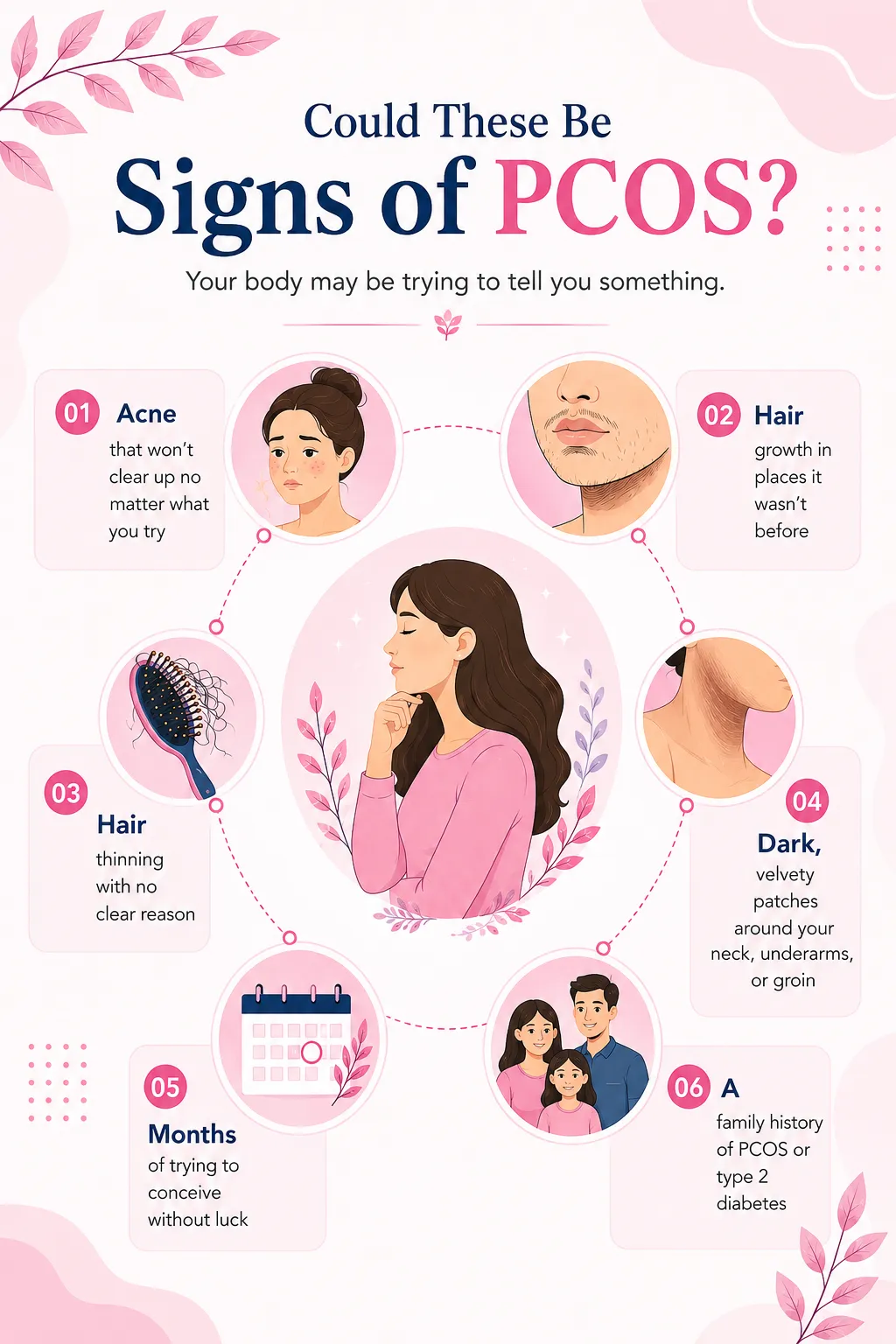
You don’t need irregular periods or a weight change as your excuse. Get checked if you’re noticing:
- Acne that won’t clear up no matter what you try
- Hair growth in places it wasn’t before
- Hair thinning with no clear reason
- Dark, velvety patches around your neck, underarms, or groin
- Months of trying to conceive without luck
- A family history of PCOS or type 2 diabetes
At Healing Touch Nursing Home, our gynaecologists take the time to actually look past the obvious stuff. If something feels wrong even without the “classic” symptoms, it’s worth checking; catching it early tends to make everything easier down the line.
Something not adding up? Come talk to our specialists; we’ll help you get real answers and a plan that actually fits you.
Frequently Asked Questions
Can you have PCOS with no symptoms at all?
Is lean PCOS the "milder" version?
Does PCOS ever just go away?
If my periods are regular, am I definitely ovulating?
What actually confirms a PCOS diagnosis?
Disclaimer: The information shared in this content is for educational purposes only and not for promotional use.
