
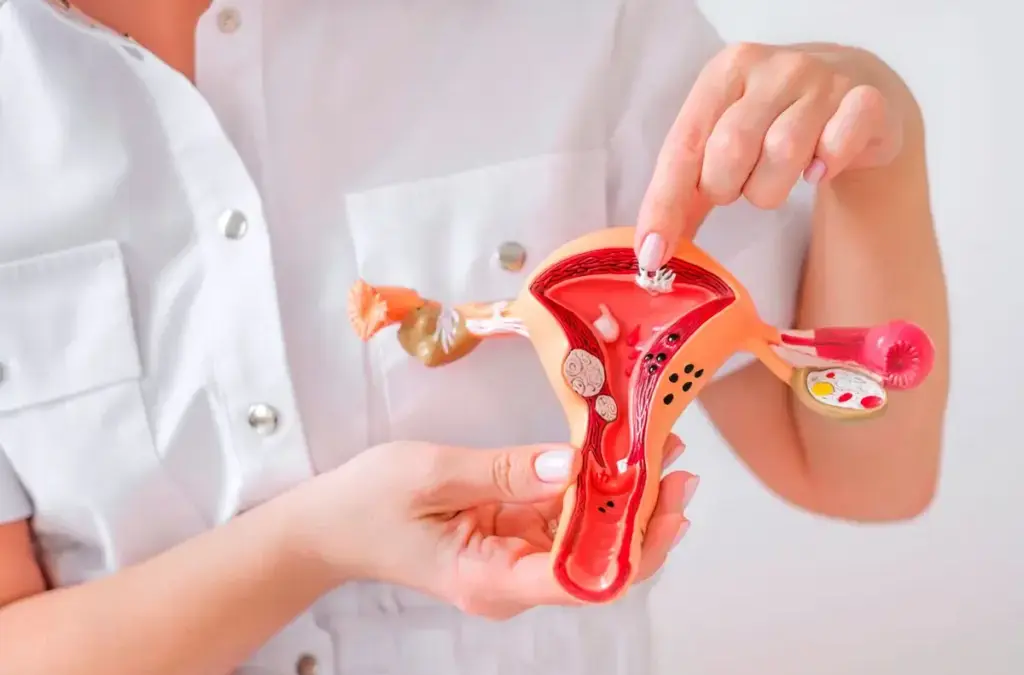
Treatment becomes necessary when fibroids start causing real trouble. Heavy bleeding that drains your iron, pain that interrupts sleep, fast growth between scans, bladder or bowel pressure, fertility setbacks, or just a life that’s getting smaller because of them. Small symptom-free fibroids? Regular ultrasound monitoring every six to twelve months handles them.
According to Dr. G.S. Tunga, Hospital in Mahishadal, “Most fibroids don’t need a knife. We only operate when bleeding, pain, or fertility issues start ruining daily life. Otherwise regular scans handle it.”
What Symptoms Mean a Fibroid Needs Surgery?
Fibroids turn from a background scan finding into a surgical case when symptoms refuse to quit. Here’s what usually tips the decision.
- Heavy bleeding: Soaking through pads every hour, periods stretching past a week, ferritin sliding into anemia range, fatigue that doesn’t lift with rest. Body’s losing blood faster than it’s being made.
- Severe pain: Pelvic pressure that won’t let you sit through a meeting or sleep on your side. Fibroid’s pressing on bladder, bowel, or pelvic nerve. No painkiller fixes that for long.
- Bladder pressure: Running to the bathroom every hour, waking up twice a night to pee, never feeling fully empty. A large fibroid sitting against the bladder wall does all of it.
- Fertility: Submucosal fibroids inside the uterine cavity block implantation. Repeat miscarriages, failed IVF cycles, unexplained infertility. Removing them before pregnancy often turns the outcome around.
That’s usually the point where fibroid surgery stops being optional.
When Can Fibroids Be Safely Monitored Instead?
Plenty of fibroids never cause a problem. They sit quietly outside the cavity, grow slowly, and often shrink after menopause without needing any treatment.
- Small size: Under 5 cm, no bleeding changes, no pain on bending or sitting. Annual pelvic ultrasound is enough. Just tracking growth and position, nothing more.
- Normal periods: Flow hasn’t changed, cycle stays predictable, energy levels steady, ferritin fine on routine bloodwork. The fibroid finding on scan becomes a footnote.
- Near menopause: Estrogen drops sharply once menopause hits and fibroids almost always shrink along with it. For women in their late 40s, riding it out usually beats operating.
- Outer fibroids: Subserosal growths on the outer uterine wall rarely touch fertility. Intramural ones that don’t push into the cavity stay silent for years.
Routine check-ups remain the smartest call for fibroid monitoring.
Why Choose Healing Touch Nursing Home for Fibroid Treatment?
Dr. G.S. Tunga runs gynae at the hospital. 17 years on fibroid surgery, open and microsurgical both. Calcutta Medical College graduate, DGO from Bankura Sammilani. Hundreds of myomectomies behind him. Default approach? Save the uterus when the case allows.
Healing Touch Nursing Home is Swasthya Sathi empanelled with a 24/7 ICU, in-house pathology, and on-site ultrasound for full pre-op workup. Everything under one roof, no running between facilities.
“Unsure if your fibroid needs surgery? Book an Appointment” at Healing Touch Nursing Home for a complete evaluation and personalised care plan.
Frequently Asked Questions
What size of fibroid is dangerous?
Fibroids over 5 cm or growing fast usually need surgical review.
Can fibroids dissolve without surgery?
Small ones shrink after menopause but medication alone won’t dissolve them.
Is fibroid surgery safe?
Myomectomy carries low complication rates with an experienced surgeon.
Will fibroids come back after myomectomy?
New ones can grow, though many women stay symptom-free for years.
References
- Myomectomy procedure — Mayo Clinic
- Fibroids overview — NHS UK
Disclaimer: The information shared in this content is for educational purposes only and not for promotional use.
